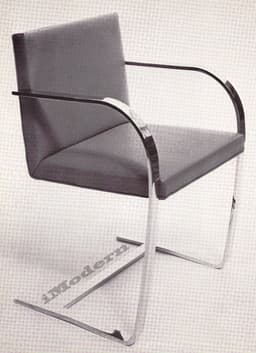
Alvar Aalto designed Armchair 41 in 1932 for the tuberculosis sanatorium at Paimio in Finland. Known by the building’s name, the chair turns a broad sheet of plywood into a continuous seat and back. Its upper and lower ends curl away from the sitter, while two pale wooden loops establish the arms and support it above the floor.
Artek identifies the frame as bent birch lamella and the seat as pressed birch plywood. The shell is attached at only four points, allowing a degree of elasticity within the surrounding structure. The paired arm frames are made from one formed piece and then separated, a method intended to keep their movement balanced as the wood ages.
The chair brings the curved surface and its supporting frame into a clear relationship. In the black example, the dark shell appears to hang within the lighter wooden outlines. Open space around the seat makes its suspension especially legible. Paimio illustrates Aalto’s investigation of wood as both a structural and expressive material, with the forms of the furniture developed for a particular architectural interior.
 Armchair by Aalto