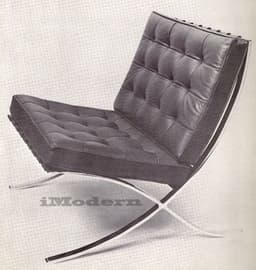
Barcelona chair
This chair was designed by Mies van der Rohe for the German Government pavilion, which he designed for the Barcelona International Exhibition of 1929.
ChairsDesignersVintage Design Chairs

60 related archive entries.
This chair was designed by Mies van der Rohe for the German Government pavilion, which he designed for the Barcelona International Exhibition of 1929.
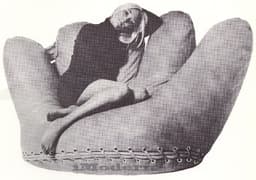
Charles Eames, referring to the designing of his 1957 lounge chair once said he wanted to design a chair that would welcome the body, like a well-used b...
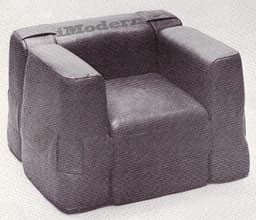
Bellini's aim in designing Chair 932 was to create an interchangeable system whereby cushions could be arranged to form a one, two or three seat chair,...
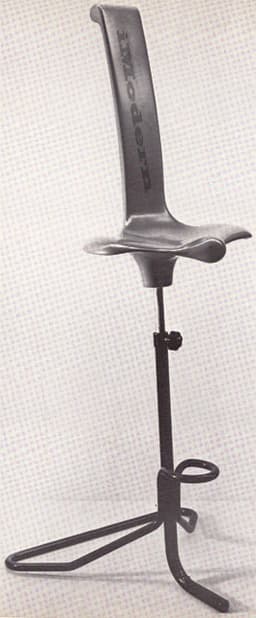
Designed for standing with some of the weight off one's legs in spaces too restricted for sitting, the Appoggio is anatomically shaped to correspond to...
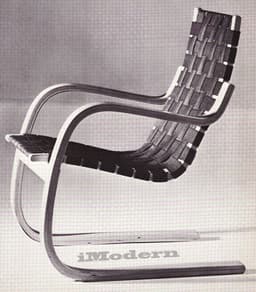
This armchair, and others like it, stem from Aaltos Armchair 41, designed in 1930.
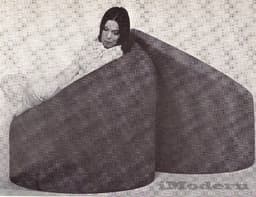
The same principles of construction used in the Torneraj apply to the Drum, showing again that almost any form can now be made to behave as a chair.
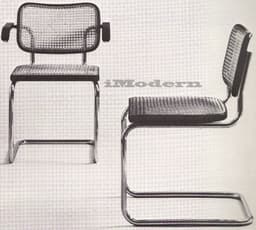
Like the MR the Cesca was designed on the cantilever principle which was capturing the imagination of architects and engineers at the time and was subse...
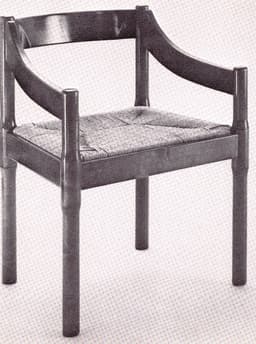
Although ostensibly a 'folksy' traditional chair, on close examination this turns out to be one of the few truly modern designs in plain wood constructi...
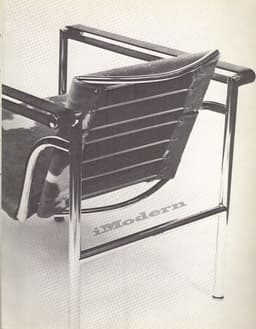
The Basculant has a frame of chromium-nickel-plated tubular steel, with calfskin seat and back, and leather strap arm rests. For the interiors of his ow...
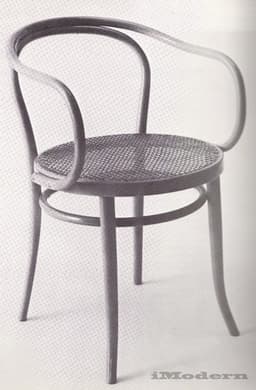
In 1840 Michael Thonet invented a process for bending wood which revolutionized the mass production of furniture. He soon established a range of bentwoo...
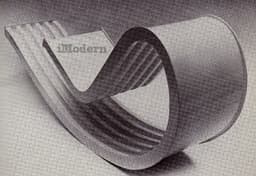
Not only successful as an abstract sculpture, the Dondolo is also highly functional. It has great strength due to its pleated structure and gives good a...
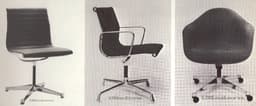
Eames produced his Aluminium Group: chairs with a single fine seat/back element in horizontally seamed fabric or vinyl coverings over vinyl-coated fabri...
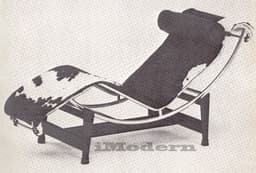
Designed by Le Corbusier in association with his partner, Charlotte Periand, and used in the furnishing of his Villa d'Avray, this is the first chaise t...
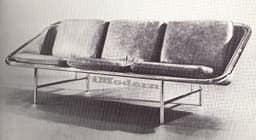
This sofa is included in a book of chairs, because it is considered to be the only sofa to rank with the chairs selected for this book, as a classic des...
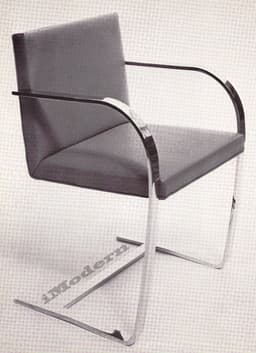
This chair was designed for the Tugendhat House in Brno, Czechoslovakia. Much greater strength is achieved in this design, visually and physically, by t...
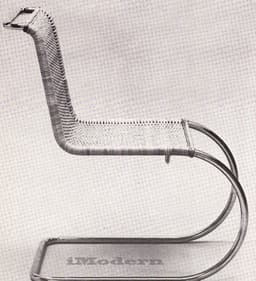
This chair was designed at the time of the earliest use of the cantilever principle for metal-frame chairs.
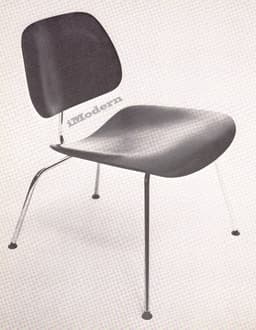
The LCM was technological in its design so it was an exceedingly advanced chair. Eames had been experimenting with formed plywood for a number of years...
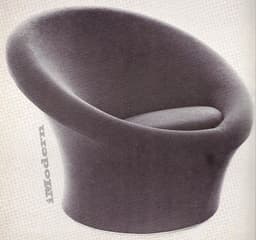
The shape of this chair is much more functional than a casual inspection would perhaps suggest.
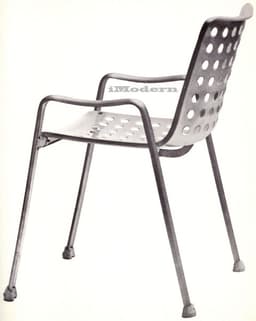
Designed as a stacking park chair for the Swiss National Exhibition in Zurich in 1938, the Landi used the latest developments of the time in aluminium t...
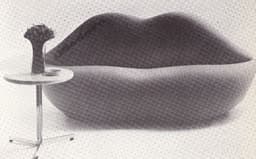
Marilyn is obviously an improved version of Salvador Dali's 'Mae West's Lips' of 1936.
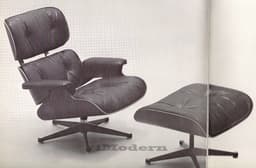
The only chair that Eames designed to achieve comfort both actual and psychological, this chair consists of a metal base which supports curved plywood p...
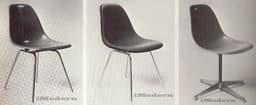
Eames regards the seat element as a shell that should be contoured to the human body and the leg structure as a quite distinct base, to which the shell...
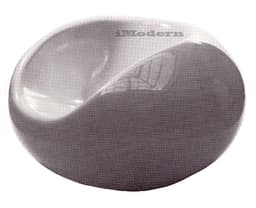
This chair is a two part fiberglass casting which is seamed around the perimeter of the form.
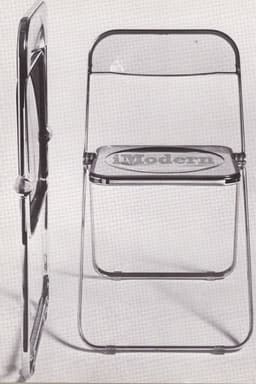
What used to be a humble folding wooden chair, has been transformed into a highly complex technological tour de force of gem-like visual simplicity.
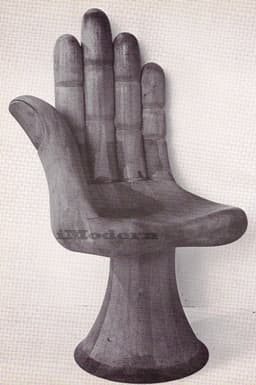
Probably the first of the new wave of surrealist chairs, this one is sold as the sculpture of Pedro Freideberg, an Italian living in Mexico.
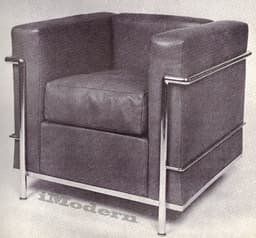
An offshoot of the long family tree of overstuffed chairs, the Grand Confort is composed of four large loose cushions fitting within a basket-like frame...
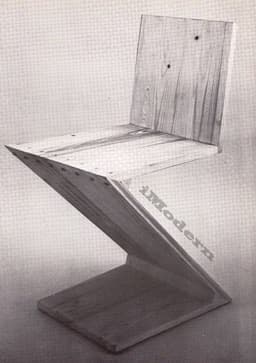
The Zigzag chair is a stark assertion of function - a platform and support for the seated human frame.
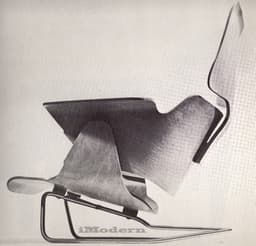
The eventual separation of each plywood element removed the need for the overlapping, but the contours of the 670 can be discerned in this earlier model.
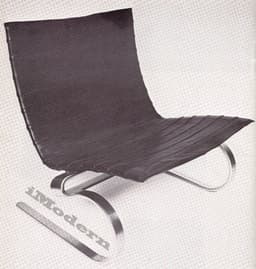
This chair is obviously developed from the Triennale chair: the supporting elements have all been simplified and the tension system is more explicit.
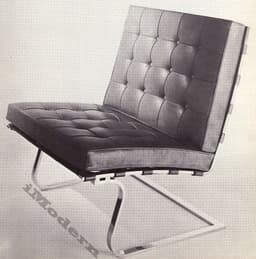
This chair was designed, like the Brno for the Tugendhat House.
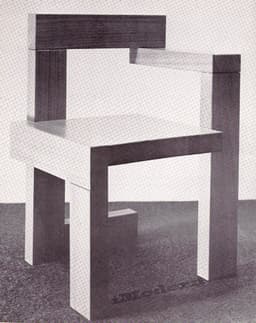
A recently discovered Rietveld design of unknown date, this is quite a different concept from his Red-Blue and Berlin chairs with their delineation of l...
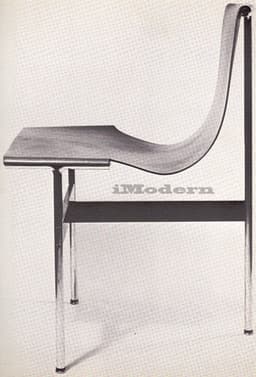
One of the most significant team efforts in furniture design has been the range of pieces of which this is the key example.
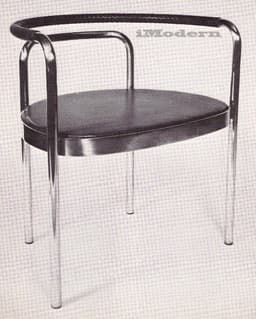
This chair is made up of two bent steel tubes forming legs, arms and back, fixed to a flat-section steel seat frame. This is filled with a flat seat pad...
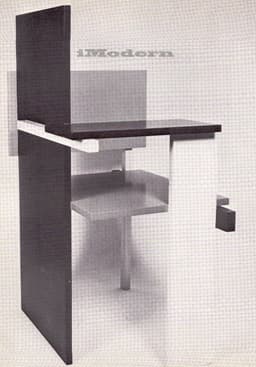
In 1923 Rietveld and the De Stijl painter, Huszar, designed a model room for an exhibition in Berlin, Huszar planning the colour and Rietveld the furnit...
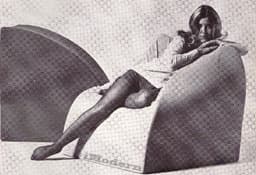
By a clever arrangement of internal hollows and thickness, the Torneraj manages to become a very good armchair when sat upon and a quarter segment of a...
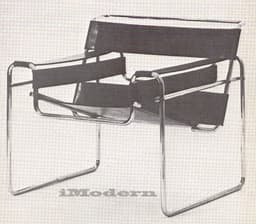
Named after the painter Wassily Kandinsky, for whose home at the Bauhaus it was made, the Wassily has a most complex arrangement of parts, with thin str...
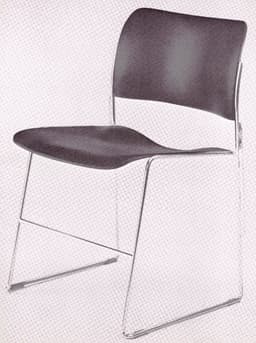
The final design date for this chair is 1964, but the research and development of the chair itself, including special techniques and materials, began in...
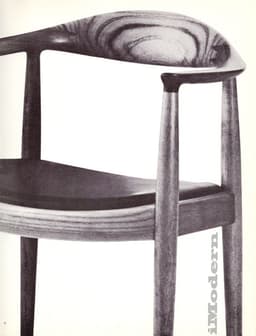
This is perhaps the best known of Wegner's extensive range of chair designs. It epitomizes the characteristic qualities of his work - classicism, sophis...
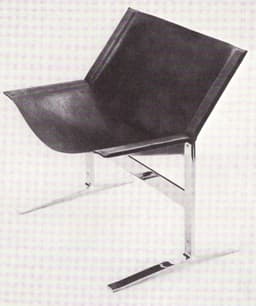
The design of this chair grew out of an interest in the possibility of using the sling principle in an anatomically correct fashion, and in a way which...
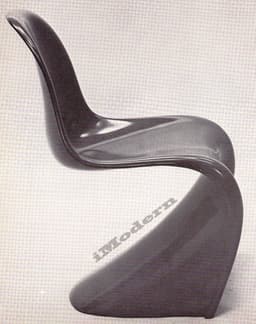
This is the first single form plastic chair, and is still one of the most satisfying and sensible. Whether or not there was any direct influence, Panton...
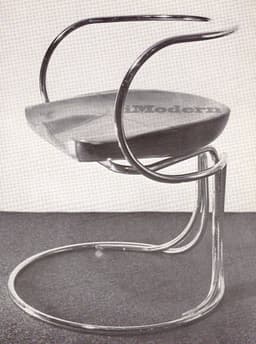
Vladimir Tatlin was a leader of the Russian Constructivist movement, and the Tatlin is the only existing chair from this period.
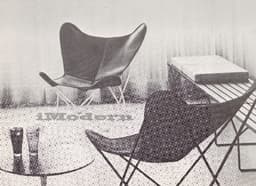
This design was patented by Joseph Fenby, an inventor, in 1877. The chair was later manufactured in Italy as the Tripolina and in the United States as t...
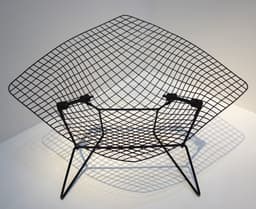
Harry Bertoia’s 1952 Diamond Chair for Knoll forms a broad, open seat from welded steel rods, joining sculptural shape with practical support.
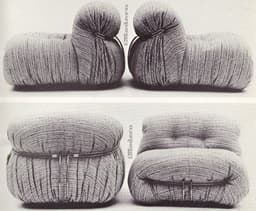
The Scarpa's have here produced something close to the ultimate alternative to traditional upholstery. Upholstered chairs used to be made by skilled cra...
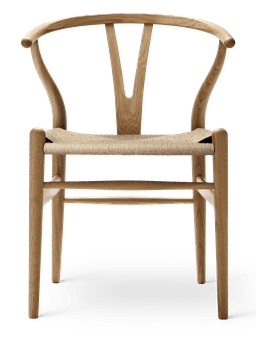
Hans J. Wegner’s CH24 Wishbone Chair, designed in 1949, combines a curved wooden top rail, Y-shaped back support and woven paper cord seat.
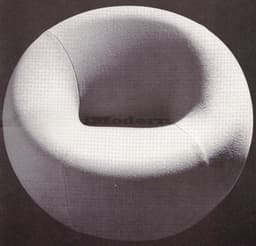
Gaetano Pesce is an architect, graphic artist and furniture designer. His Up 1 chair solved several problems in a unique and amusing way.
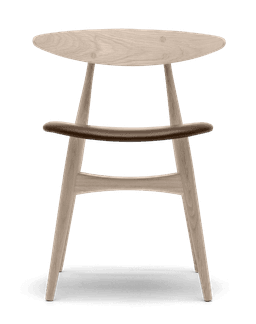
Hans J. Wegner’s CH33 dining chair of 1957 has a curved veneer backrest and tapered wooden frame; the CH33P version adds an upholstered seat.
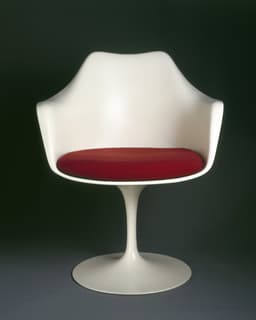
Eero Saarinen’s Tulip Armchair for Knoll, introduced in 1957, combines a molded fiberglass shell with a single cast aluminum pedestal.

Eero Aarnio’s Ball Chair was designed in 1963 and introduced internationally in 1966, using a fiberglass shell to enclose an upholstered seat.
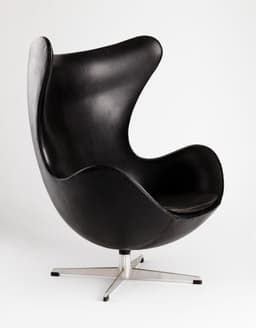
Arne Jacobsen’s 1958 Egg Chair for the SAS Royal Hotel in Copenhagen, a sculptural upholstered seat produced by Fritz Hansen.
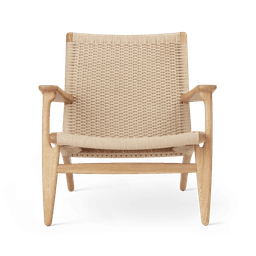
Wegner’s CH25 lounge chair entered production in 1950, pairing a shaped wooden frame with a hand-woven paper cord seat and backrest.
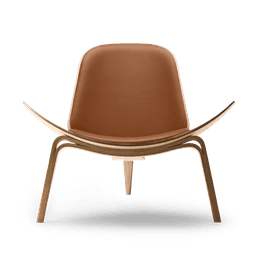
The 1963 CH07 Shell Chair by Hans J. Wegner uses upholstered veneer shells and three laminated legs to create a broad, low lounge seat.
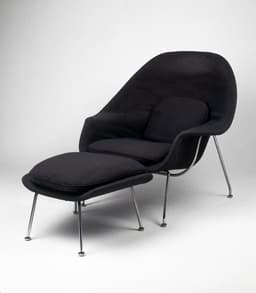
Eero Saarinen’s 1948 Womb Chair for Knoll, with an upholstered fiberglass shell shaped for relaxed sitting and a light steel rod base.
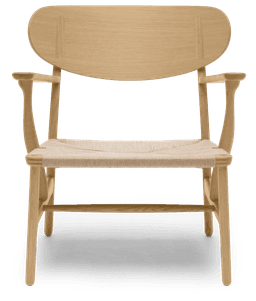
The CH22 lounge chair, part of Wegner’s first Carl Hansen & Søn collection, combines a broad wooden back with an exposed frame and cord seat.
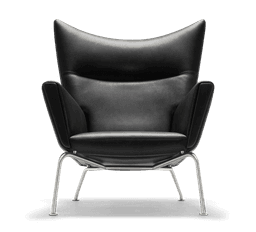
The CH445 Wing Chair by Hans J. Wegner combines a high upholstered back, a solid beech inner frame and a slender stainless steel base.
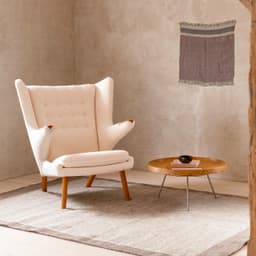
Wegner’s 1951 Papa Bear Chair, now designated PP19, combines an upholstered wing back with exposed wooden arm tips and traditional padding.
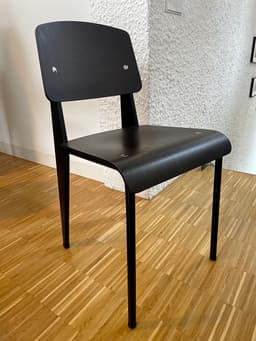
Jean Prouvé’s Standard Chair uses broad hollow rear legs and narrow tubular front legs to express the different loads carried by its steel frame.
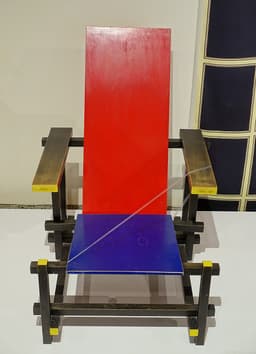
Rietveld’s Red Blue Chair combines separate wooden rails and planes; its primary colours, applied around 1923, connect the design with De Stijl.
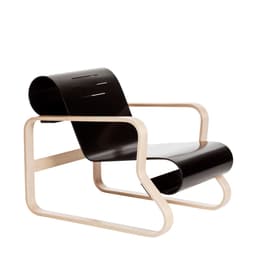
Alvar Aalto’s 1932 Paimio Armchair combines a curled plywood seat with laminated birch side frames, developed for the Paimio sanatorium interior.
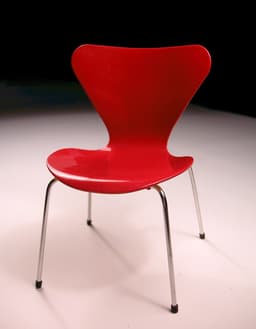
Arne Jacobsen’s Series 7 chair of 1955 develops a continuous plywood seat and back, with nine layers of veneer supported by slim steel legs.