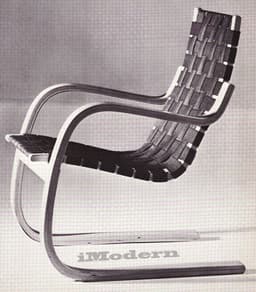
Armchair by Aalto
This armchair, and others like it, stem from Aaltos Armchair 41, designed in 1930.
ChairsDesignersVintage Design Chairs

40 related archive entries.
This armchair, and others like it, stem from Aaltos Armchair 41, designed in 1930.
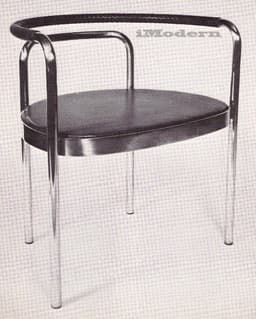
This chair is made up of two bent steel tubes forming legs, arms and back, fixed to a flat-section steel seat frame. This is filled with a flat seat pad...
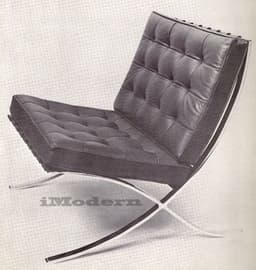
This chair was designed by Mies van der Rohe for the German Government pavilion, which he designed for the Barcelona International Exhibition of 1929.
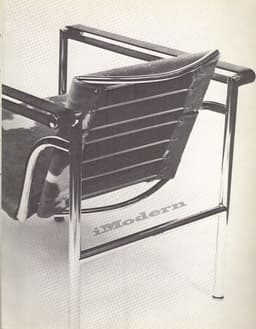
The Basculant has a frame of chromium-nickel-plated tubular steel, with calfskin seat and back, and leather strap arm rests. For the interiors of his ow...
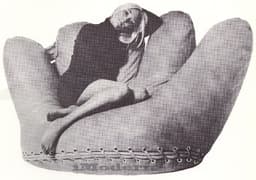
Charles Eames, referring to the designing of his 1957 lounge chair once said he wanted to design a chair that would welcome the body, like a well-used b...
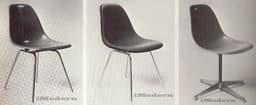
Eames regards the seat element as a shell that should be contoured to the human body and the leg structure as a quite distinct base, to which the shell...
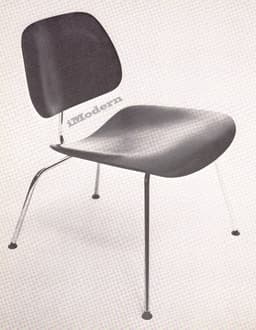
The LCM was technological in its design so it was an exceedingly advanced chair. Eames had been experimenting with formed plywood for a number of years...
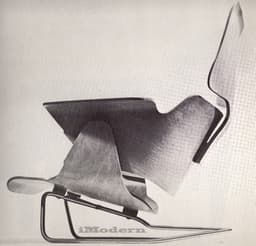
The eventual separation of each plywood element removed the need for the overlapping, but the contours of the 670 can be discerned in this earlier model.
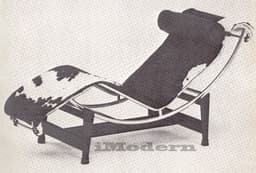
Designed by Le Corbusier in association with his partner, Charlotte Periand, and used in the furnishing of his Villa d'Avray, this is the first chaise t...
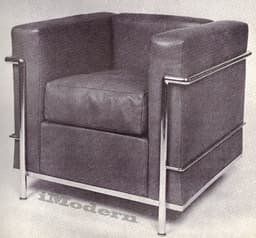
An offshoot of the long family tree of overstuffed chairs, the Grand Confort is composed of four large loose cushions fitting within a basket-like frame...
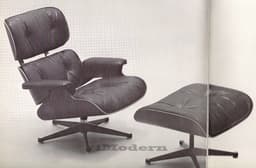
The only chair that Eames designed to achieve comfort both actual and psychological, this chair consists of a metal base which supports curved plywood p...
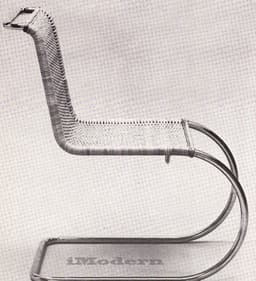
This chair was designed at the time of the earliest use of the cantilever principle for metal-frame chairs.
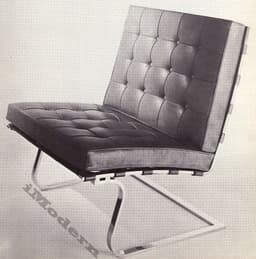
This chair was designed, like the Brno for the Tugendhat House.
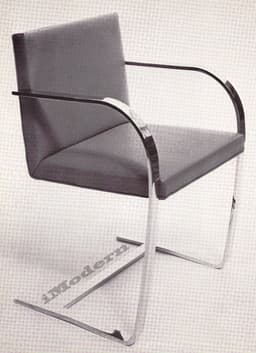
This chair was designed for the Tugendhat House in Brno, Czechoslovakia. Much greater strength is achieved in this design, visually and physically, by t...
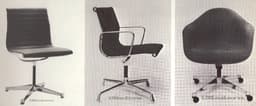
Eames produced his Aluminium Group: chairs with a single fine seat/back element in horizontally seamed fabric or vinyl coverings over vinyl-coated fabri...
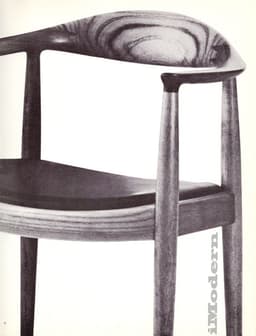
This is perhaps the best known of Wegner's extensive range of chair designs. It epitomizes the characteristic qualities of his work - classicism, sophis...
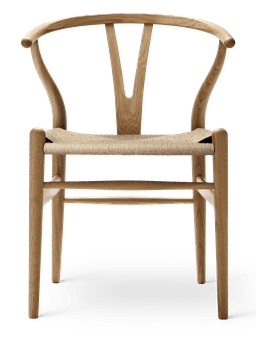
Hans J. Wegner’s CH24 Wishbone Chair, designed in 1949, combines a curved wooden top rail, Y-shaped back support and woven paper cord seat.
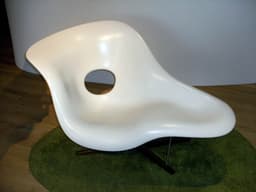
Charles and Ray Eames designed La Chaise for MoMA’s 1948 furniture competition, drawing on Gaston Lachaise’s Floating Figure sculpture.
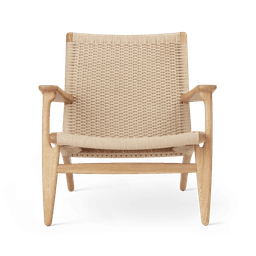
Wegner’s CH25 lounge chair entered production in 1950, pairing a shaped wooden frame with a hand-woven paper cord seat and backrest.
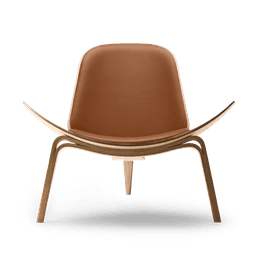
The 1963 CH07 Shell Chair by Hans J. Wegner uses upholstered veneer shells and three laminated legs to create a broad, low lounge seat.
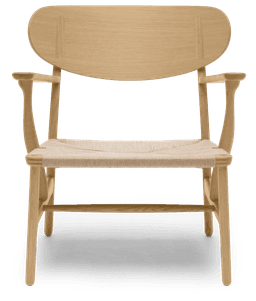
The CH22 lounge chair, part of Wegner’s first Carl Hansen & Søn collection, combines a broad wooden back with an exposed frame and cord seat.
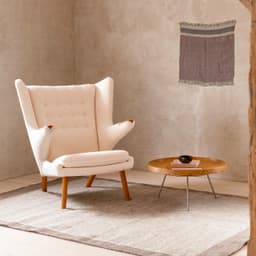
Wegner’s 1951 Papa Bear Chair, now designated PP19, combines an upholstered wing back with exposed wooden arm tips and traditional padding.
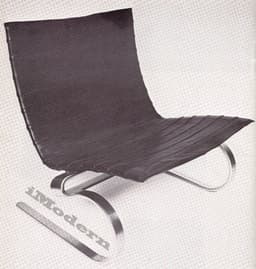
This chair is obviously developed from the Triennale chair: the supporting elements have all been simplified and the tension system is more explicit.
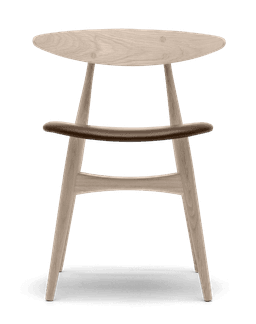
Hans J. Wegner’s CH33 dining chair of 1957 has a curved veneer backrest and tapered wooden frame; the CH33P version adds an upholstered seat.
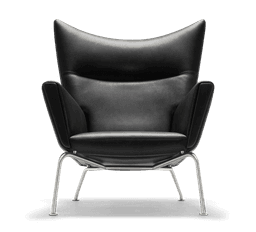
The CH445 Wing Chair by Hans J. Wegner combines a high upholstered back, a solid beech inner frame and a slender stainless steel base.
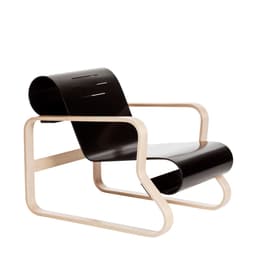
Alvar Aalto’s 1932 Paimio Armchair combines a curled plywood seat with laminated birch side frames, developed for the Paimio sanatorium interior.
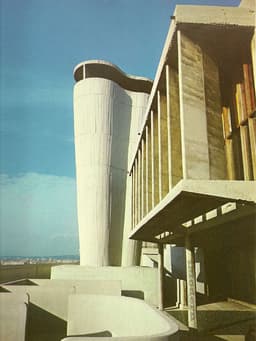
When l'Unite d'habitation and its unprecedented forms became an integral part of the Marseilles landscape, the cycle of the 'town-planning revolution' w...
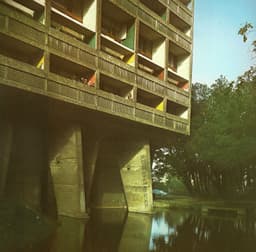
L'Unite d'habitation, Nantes Reze Pilotis - designed by Le Corbusier.
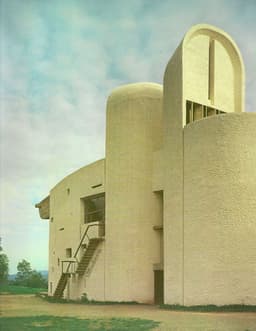
Le Corbusier did not lose his way, on the contrary, l'Unite at Marseilles strengthened his dogged faith in his own creed. He felt that here at last was...
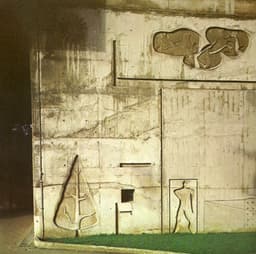
L'Unite d'habitation in Nantes Reze Reliefs - designed by Le Corbusier.
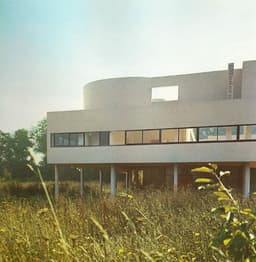
The Villa Savoye seems to grow from the interior, almost as though reacting against any form of external 'front', thanks to a central force, which is al...
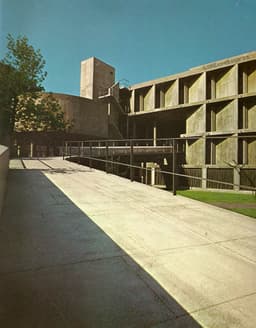
Exterior view of The Visual Arts Center in Cambridge, Massachusetts, USA. Designed by Le Corbusier.
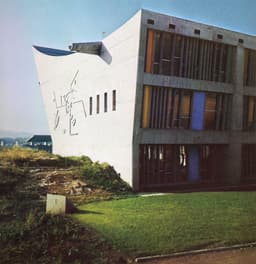
The Youth and Cultural Center in Firminy, France. Designed by Le Corbusier.
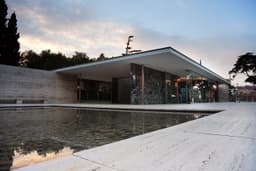
Mies van der Rohe and Lilly Reich composed the Barcelona Pavilion from glass, polished stone and slender steel columns for the 1929 exposition.

Le Corbusier’s National Museum of Western Art links a concrete gallery building, a sculptural forecourt and an evolving museum collection in Ueno Park.
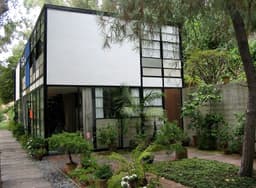
Charles and Ray Eames combined a steel-framed home and studio with a preserved meadow in their 1949 Case Study House No. 8.
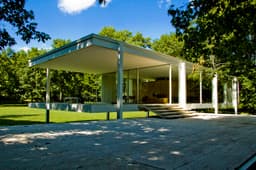
Mies van der Rohe’s 1951 Edith Farnsworth House in Plano, Illinois, arranges a transparent living space above the Fox River landscape.
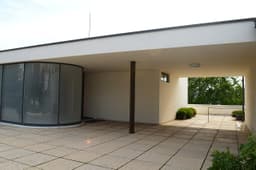
Villa Tugendhat combines a steel frame, a flowing living area and richly finished partitions in Mies van der Rohe’s hillside house in Brno.
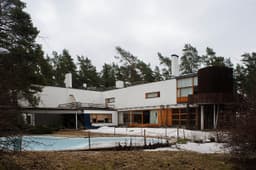
Villa Mairea combines modern planning with timber, stone and garden spaces in the Aaltos’ experimental home for Maire and Harry Gullichsen.
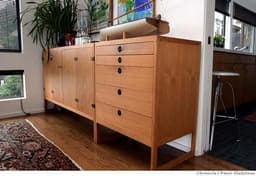
Architect Rodney Friedman and his wife, Shirley, sit at their dining room table on "wishbone" chairs by Danish designer Hans Wegner they purchased 45 ye...